
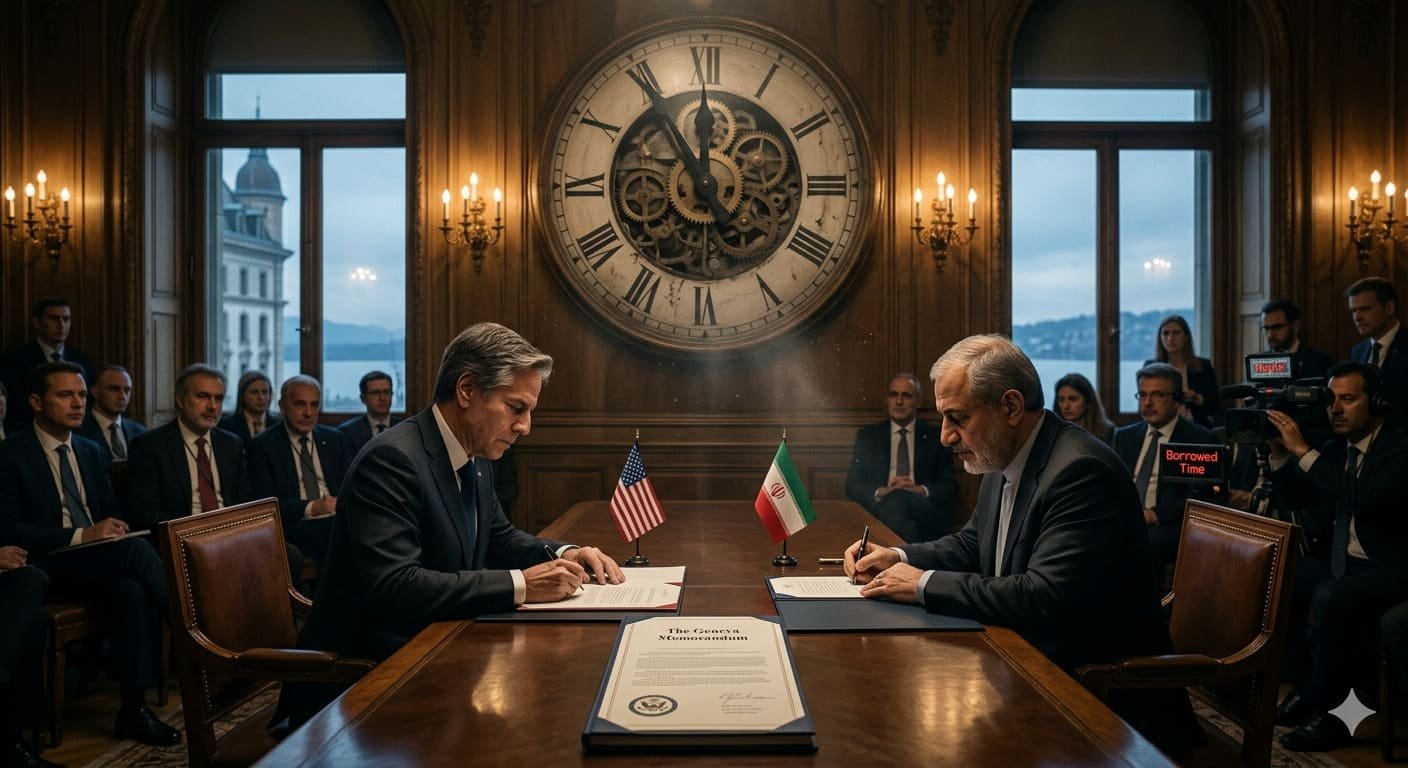
The Geneva Memorandum: Why the New US-Iran Peace Deal Is Built on Borrowed Time
The guns have stopped. The Strait of Hormuz is open again. But the US-Iran deal signed in Geneva this week leaves the hardest questions for later and later may come sooner than expected.
<p>The announcement came suddenly, as these things tend to do. Over the weekend, the United States and Iran declared an immediate halt to military operations, pausing a three-month war that had pushed oil markets to the edge and rattled shipping lanes across the globe. President Trump celebrated on social media. State television in Tehran declared victory. Global fuel prices fell overnight.</p><p>
The Memorandum of Understanding is set to be formally signed this Friday, June 19, in Geneva. The naval blockade is lifting. The Strait of Hormuz is reopening. For the first time in months, the world exhaled.</p><p>
But seasoned analysts are already asking the harder question: will this deal actually hold?</p><p>
<b>The nuclear question goes unanswered</b><b></b></p><p>The most significant weakness of the Geneva agreement is not what it contains, it's what it deliberately avoids.</p><p>The core catalyst of the war was Iran's nuclear programme. The deal does not resolve it. Instead, both sides agreed to an immediate return to the pre-war status quo, the US lifts its naval blockade, Iran reopens the strait; while pushing the genuinely explosive question of what happens to Iran's highly enriched uranium stockpiles into a 60-day window of future technical talks.</p><p>The White House has not moved on its red line: Iran cannot develop a nuclear weapon. Iran's delegation, under significant pressure from hard-liners at home, has conceded nothing on enrichment rights. Both sides have essentially agreed to stop fighting without agreeing on why they were fighting in the first place. That is an intermission, not a resolution.</p><p><b>Israel was not in the room</b></p><p>A peace deal is only as stable as the behaviour of the parties closest to the conflict. In this case, Israel remains a live variable that the agreement does not fully account for.</p><p>Pakistani and Qatari mediators drove the final 14-hour push to a US-Iran consensus, but Israel was largely kept to the margins of those talks. The accord calls for a halt to military operations across all fronts, including Lebanon. Yet even as the text was being finalised, Israeli airstrikes continued hitting southern Beirut, and Prime Minister Netanyahu made clear that Israeli forces would maintain an active presence in the region regardless of what was signed in Geneva.</p><p>If Iranian-backed groups continue to face military pressure from Israel, Tehran's leadership will find it politically very difficult to maintain non-retaliation. One significant strike in the wrong place, at the wrong moment, could put the entire framework under severe stress.</p><p><b>The economic relief may arrive slower than promised</b></p><p>For Iran, the primary incentive to stop fighting is economic. The war has left the country in serious fiscal difficulty, and negotiators have sold the deal at home as the beginning of a major financial recovery, pointing to a promised $300 billion regional reconstruction fund and the return of $12 billion in frozen assets.</p><p>The reality is more complicated. The web of US sanctions against Iran is built into layers of congressional legislation and presidential executive orders that cannot be unwound quickly. The US has only committed to conditional sanctions relief for the 60-day duration of the nuclear talks. If Iranian businesses find that international banks remain too cautious about American legal risk to process transactions, the economic pressure that brought Tehran to the table will return and with it, the political pressure to walk away.</p><p><b>A tactical pause, not a peace</b></p><p>Both governments needed a way out of a war that neither could comfortably win or afford to keep fighting. Washington secured the reopening of global energy lanes in time to ease domestic economic anxiety. Tehran preserved its government structure and its regional deterrents without formally surrendering ground on the nuclear question.</p><p>The Geneva Memorandum is a genuine achievement in the narrow sense, the shooting has stopped, and that matters. But the conditions that produced this conflict remain entirely in place. The nuclear threshold question is unresolved. The proxy networks are intact. The institutional distrust runs deep on both sides.</p><p>Sixty days is a short window. The real test of this deal begins the moment the cameras leave Geneva.</p>
Date
Featured
Verified
Community Engagement
Community
⚔️
📝
👁
🎯
📊
✏️
Comments ()
Sign in to join the conversation
Sign InNo comments yet. Be the first to share your thoughts!
Comments will be loaded here...