
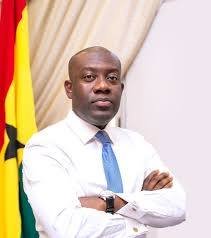
The writ, filed on Friday, August 14, 2026, names Chief Justice Paul Baffoe-Bonnie as the first defendant and Attorney-General and Minister for Justice Dominic Ayine as the second defendant.
Oppong Nkrumah is invoking the original jurisdiction of the Supreme Court under Articles 2(1) and 130(1) of the 1992 Constitution. He is asking the apex court to declare the administrative warrants issued by the Chief Justice unconstitutional, null and void.
At the centre of the case is the decision to prioritise what have been described as “special criminal cases” for hearing during the legal vacation, while other criminal matters remain pending.
Oppong Nkrumah argues that the arrangement amounts to selective justice and is inconsistent with the constitutional principle of equality before the law. He is relying, among others, on Articles 17(1) and (2), 23 and 296(a) and (b), which deal with equality, fairness and the exercise of discretionary powers.
The MP is also challenging Order 79 Rules 1(1) and 2 of the High Court (Civil Procedure) Rules, 2004 (C.I. 47), to the extent that the provisions permit the Chief Justice to select cases for hearing during legal vacations.
He further contends that requiring lawyers, judges and Judicial Service personnel to work on selected cases during the vacation raises concerns about their health, welfare and working conditions. He is therefore asking the Supreme Court to consider the directive in light of Articles 24(1) and (2) and 36(10) of the Constitution.
The 2026 legal vacation runs from August 1 to September 30, during which regular court sittings are generally suspended, although certain matters may be heard under applicable arrangements.
Oppong Nkrumah has brought the action in his capacities as a Ghanaian citizen, Member of Parliament and lawyer. The Chief Justice and the Attorney-General have been given 14 days after service of the writ to file their respective statements of case.
The case could ultimately provide clarification on the scope of the Chief Justice’s authority to organise vacation sittings and select cases for hearing, as well as the constitutional limits on that discretion.
Comments ()
Sign in to join the conversation
Sign InNo comments yet. Be the first to share your thoughts!
Comments will be loaded here...