

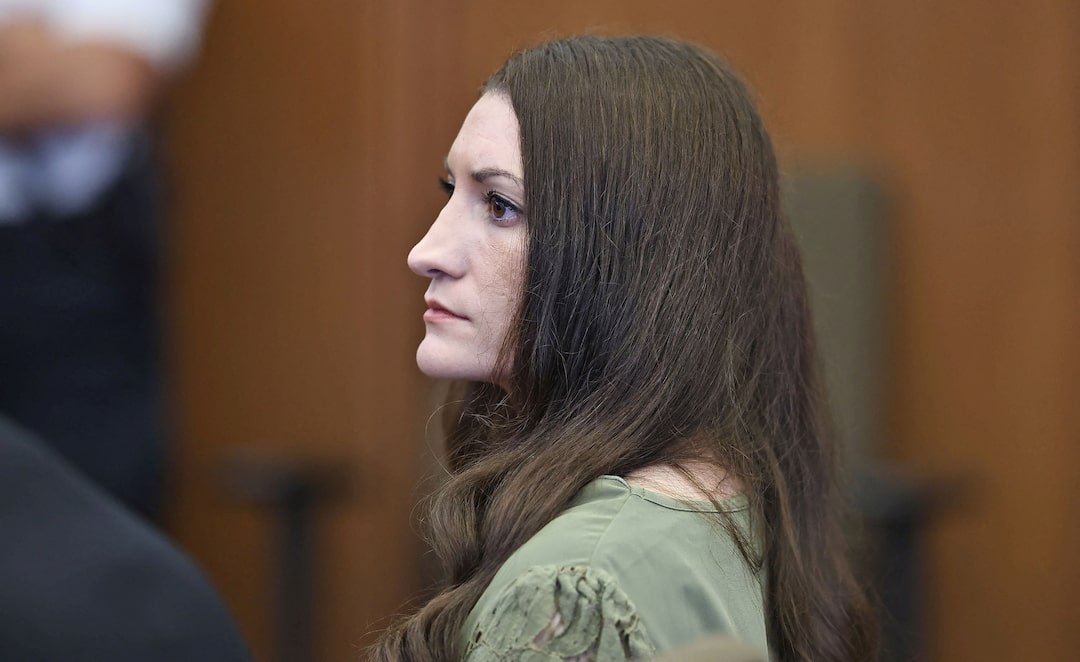
Judge William Sullivan declared a mistrial on September 4, 2026, after the 12-member jury remained deadlocked following more than 38 hours of deliberations. The development leaves prosecutors with the option of seeking a new trial and brings renewed attention to the difficult intersection of severe mental illness, postpartum psychosis and criminal responsibility.
Clancy, 36, a former labor and delivery nurse from Duxbury, Massachusetts, was charged with first-degree murder in connection with the January 2023 deaths of her children, Cora, 5, Dawson, 3, and Callan, 8 months.
She has not denied killing the children. Instead, her defence has argued that she was suffering from a severe psychotic illness at the time and should therefore be found not guilty by reason of lack of criminal responsibility.
A case centred on mental illness
The central question throughout the trial was not simply whether Clancy killed her children, but what was happening inside her mind when the killings occurred.
The defence portrayed Clancy as a mother whose mental health had deteriorated dramatically after the birth of her youngest child. Her lawyers argued that she experienced postpartum psychosis, severe depression and other psychiatric symptoms and that her condition was worsened by the treatment and medications she received.
A defence psychiatrist testified that Clancy was experiencing an acute psychotic episode at the time of the killings.
Family members also described a woman whose behaviour and mental state had changed substantially in the months before the tragedy. Her husband, Patrick Clancy, testified about the deterioration he witnessed and has publicly expressed sympathy for Lindsay while attributing the tragedy to her mental-health crisis.
The defence's broader argument has been that Clancy repeatedly sought medical and psychiatric assistance but did not receive treatment capable of preventing the catastrophe.
Prosecutors painted a different picture
Prosecutors rejected the argument that Clancy was legally incapable of understanding her actions.
They argued that the killings were deliberate and premeditated, contending that Clancy understood what she was doing and took steps that demonstrated planning.
The prosecution pointed to evidence including internet searches and other digital evidence, as well as events surrounding the killings, to argue that Clancy's actions were intentional rather than the product of an uncontrollable psychotic episode.
Reuters reported that prosecutors presented evidence that Clancy had searched online for subjects including postpartum psychosis and suicidal ideation in the days before the killings.
The prosecution's position was therefore fundamentally different from the defence's: while acknowledging Clancy's mental-health difficulties, prosecutors argued that those difficulties did not eliminate her criminal responsibility.
What happened in January 2023?
On January 24, 2023, Clancy's three children were killed at the family's Duxbury home.
Authorities said the children were strangled. After the killings, Clancy attempted to take her own life by jumping from a window, leaving her with severe injuries and permanent paralysis.
The deaths shocked the community and quickly became a national story, in large part because of the questions surrounding Clancy's mental health.
The case subsequently became a focal point in the wider conversation about postpartum mental illness and whether vulnerable mothers are receiving adequate psychiatric care.
Seven days of deliberations — and no verdict
After weeks of testimony, the jury began deliberations and spent more than 38 hours considering the case. The jury ultimately became deadlocked.
Reports indicate that the panel was split 11-1, with one juror refusing to join the majority position. The juror's position became the subject of intense disagreement among the panel and a last-minute legal challenge by Clancy's defence team.
Clancy's lawyers argued that the holdout juror was not properly applying the court's instructions concerning reasonable doubt and asked the Massachusetts Supreme Judicial Court to intervene. That effort failed, and Judge Sullivan eventually declared a mistrial.
The development means that Clancy has neither been convicted nor acquitted of the murder charges.
What happens next?
The immediate future of the case remains uncertain. Plymouth County prosecutors have the option of bringing Clancy before another jury. However, prosecutors had not announced a decision on a retrial immediately after the mistrial. A further court hearing has been scheduled for September 29.
A retrial would force both sides to revisit a case that lasted almost six weeks and involved highly emotional testimony from family members, medical professionals and psychiatric experts. A negotiated resolution is another possibility, although no such agreement has been announced. Clancy remains in a state psychiatric facility while the case continues.
Lawyer asks Trump for pardon
The case took another unexpected turn on September 8 when Clancy's attorney, Kevin Reddington, appealed publicly to President Donald Trump for a pardon following the mistrial. Reddington cited Clancy's mental-health condition and the circumstances surrounding the deaths in making the appeal.
There is, however, a significant legal obstacle: the case is being prosecuted under Massachusetts state law, while the U.S. president's constitutional pardon authority generally applies to federal offences, not state crimes. Trump has previously commented publicly on the Clancy case, and the possibility of clemency has nevertheless added another layer to an already extraordinary legal saga.
A tragedy that extends beyond the courtroom
The Lindsay Clancy case has become about more than a criminal prosecution.
At its centre are three children whose deaths devastated their family. But the proceedings have also raised difficult questions about how the healthcare system identifies and treats severe postpartum psychiatric illness, how society responds when mothers experience psychosis, and where the law should draw the line between mental illness and criminal responsibility. Those questions are unlikely to disappear even if prosecutors decide to retry Clancy.
For now, there is no final verdict in the case. A jury was unable to determine whether Lindsay Clancy should be held criminally responsible for the deaths of her three children, leaving the possibility of another trial — and ensuring that one of America's most closely followed criminal cases remains unresolved.
Photo courtery: Lindsay Clancy, Reuters
Comments ()
Sign in to join the conversation
Sign InNo comments yet. Be the first to share your thoughts!
Comments will be loaded here...