

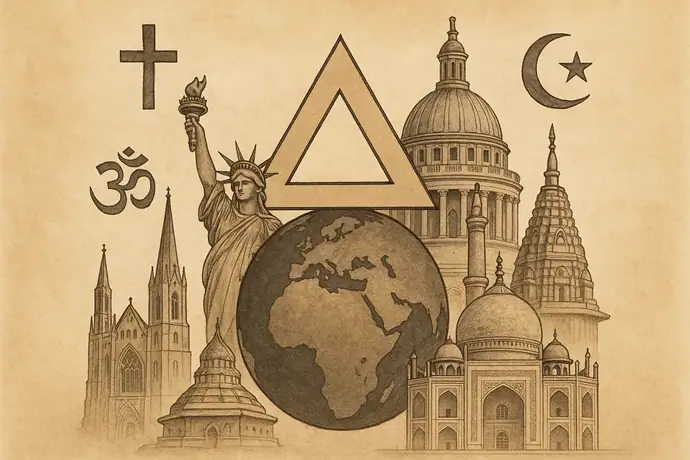
The modern world has introduced new priorities. Education, careers, financial responsibilities, relationships, and the pressure to succeed have become central to everyday life. People are constantly trying to build a future for themselves, and sometimes, religious activities become less important in that pursuit.
There was a time when attending church was an important part of growing up. For many children, Sunday mornings meant waking up early, dressing up, and going to church with their parents. Religious activities were part of family life, and faith played a significant role in shaping how people understood the world around them. But as those children grow into adults, something seems to be changing. The same people who once attended church regularly are becoming less present. Some have stopped going altogether, while others attend only on special occasions. For many, Sunday mornings have become a time to rest, work, study, or simply enjoy their personal lives. This raises an important question: Is religion slowly losing its place in our lives?
For a young adult trying to secure a job, pay bills, or complete an education, finding time for regular church attendance may not always be easy. Others may feel that they can maintain their relationship with God without physically attending a church service every Sunday. In their minds, faith is personal, and it does not necessarily have to be demonstrated through attendance. But is this simply a change in lifestyle, or does it suggest something deeper?
Perhaps one reason some people are moving away from religion is the desire to think independently. As people grow older, they begin to question things they once accepted without hesitation. They want explanations, not just instructions. They want to understand why certain practices exist rather than follow them simply because they were taught to do so. For some, religion provides comfort, direction, and a sense of belonging. For others, it can sometimes feel restrictive, particularly when religious teachings appear to conflict with their personal convictions or understanding of the world. Some see religion as a means of controlling people’s behaviour, thoughts, and decisions.
When people feel pressured to accept everything without questioning it, they may eventually begin to distance themselves from the institution that once gave them a sense of identity. After all, the human mind has the ability to question, reason, and distinguish between right and wrong. People can recognise the importance of kindness, honesty, compassion, and justice through their experiences and interactions with others. This leads some to ask whether morality must always be rooted in religion.
Yet, it would be unfair to suggest that religion has no place in shaping human character. For millions of people, faith remains a powerful source of hope, discipline, community, and moral guidance. Religious institutions also provide support during difficult times, bringing people together to help those in need. The problem, therefore, may not necessarily be religion itself, but how it is practised, communicated, and experienced. If young people feel that their questions are unwelcome, their struggles are misunderstood, or their lives are judged without compassion, they may begin to see religion as something that no longer speaks to them.
When religious institutions fail to connect with the realities of modern life, they risk losing the very people they hope to guide. Perhaps the solution is not to force people to remain religious, but to create spaces where questions can be asked, doubts can be discussed, and faith can be explored without fear. Religion should be able to engage with the changing world rather than simply condemn every change it does not understand. At the same time, people must be careful not to confuse independence with the absence of values. Choosing one’s own path comes with the responsibility to consider how one’s decisions affect others. Whether a person is religious or not, honesty, respect, empathy, and responsibility remain essential to a healthy society.
So, is religion fading out? Perhaps not entirely. Maybe what we are witnessing is not the disappearance of faith, but a change in how people understand and practise it. Some are leaving religious institutions, some are redefining their beliefs, and others are holding on to their faith more strongly than ever. The real question may not be whether people are leaving the church, but whether the church is still reaching people in ways that matter to them.
Because at the end of the day, religion cannot survive on childhood habits alone. It must continue to give people reasons to believe, to participate, and to find meaning in what they practise. Perhaps religion is not disappearing; perhaps people are simply beginning to ask what it truly means to believe.
Comments ()
Sign in to join the conversation
Sign InNo comments yet. Be the first to share your thoughts!
Comments will be loaded here...