
The public policy research and advocacy organisation made the appeal in a statement dated Monday, September 28, 2026, ahead of the scheduled commencement of full enforcement on October 1.
CUTS said it supports the use of technology to improve compliance with road traffic regulations and reduce road crashes but stressed that motorists must be provided with clear and functional road infrastructure before automated penalties are imposed.
“Government should hold drivers to the law. Government must also make the law clear and visible on the road,” the organisation stated.
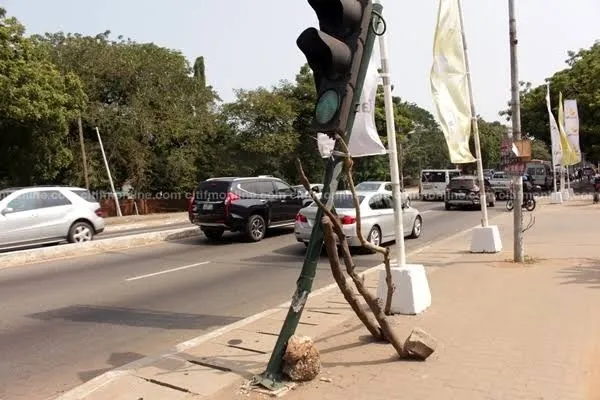
It warned that faulty traffic lights, faded road markings and poorly positioned signs could expose motorists to penalties for offences they might not have been able to avoid.
The organisation specifically identified concerns about traffic lights on the Nsawam-Accra Road, near the Apenkwa-Achimota overhead bridge, and at the Police Training Academy junction in Tesano.
According to CUTS, some traffic lights at these locations have reportedly shifted out of the clear line of sight of approaching motorists, even though the TRAFFITECH-GH cameras appear to be correctly positioned.
It argued that a camera's ability to capture a vehicle does not necessarily mean the driver has a clear view of the traffic signal governing the road.
CUTS has therefore called on the Ghana Police Service and the Department of Urban Roads to inspect all enforcement locations from the perspective of approaching drivers, including visibility at night and during rainy weather.
The organisation also recommended repairing faulty traffic lights, realigning displaced signal heads, trimming overgrown vegetation and repainting faded lane markings and stop lines.
It proposed that automated fines for specific offences should only be activated at a location after the road infrastructure necessary for compliance has been confirmed to be functional and clearly visible.
TRAFFITECH-GH is an automated traffic enforcement initiative of the Ghana Police Service designed to detect offences such as speeding and running red lights through cameras and other technological devices.
The system is expected to begin full implementation on October 1, 2026, as part of efforts to improve road discipline and reduce traffic-related accidents.
CUTS maintains that effective enforcement must be accompanied by safe, visible and properly maintained road infrastructure to ensure fairness and public confidence in the system.
Photo courtesy: 3news
Comments ()
Sign in to join the conversation
Sign InNo comments yet. Be the first to share your thoughts!
Comments will be loaded here...